In premium development, architecture is no longer simply a wrapper around a commercial product. It is becoming the product itself — one designed with an investment horizon measured in decades. At Design Summit 2026, investors and architects discussed the economics of meaning, the value of historical identity, and the growing conflict between ambitious private development and outdated urban planning regulations.
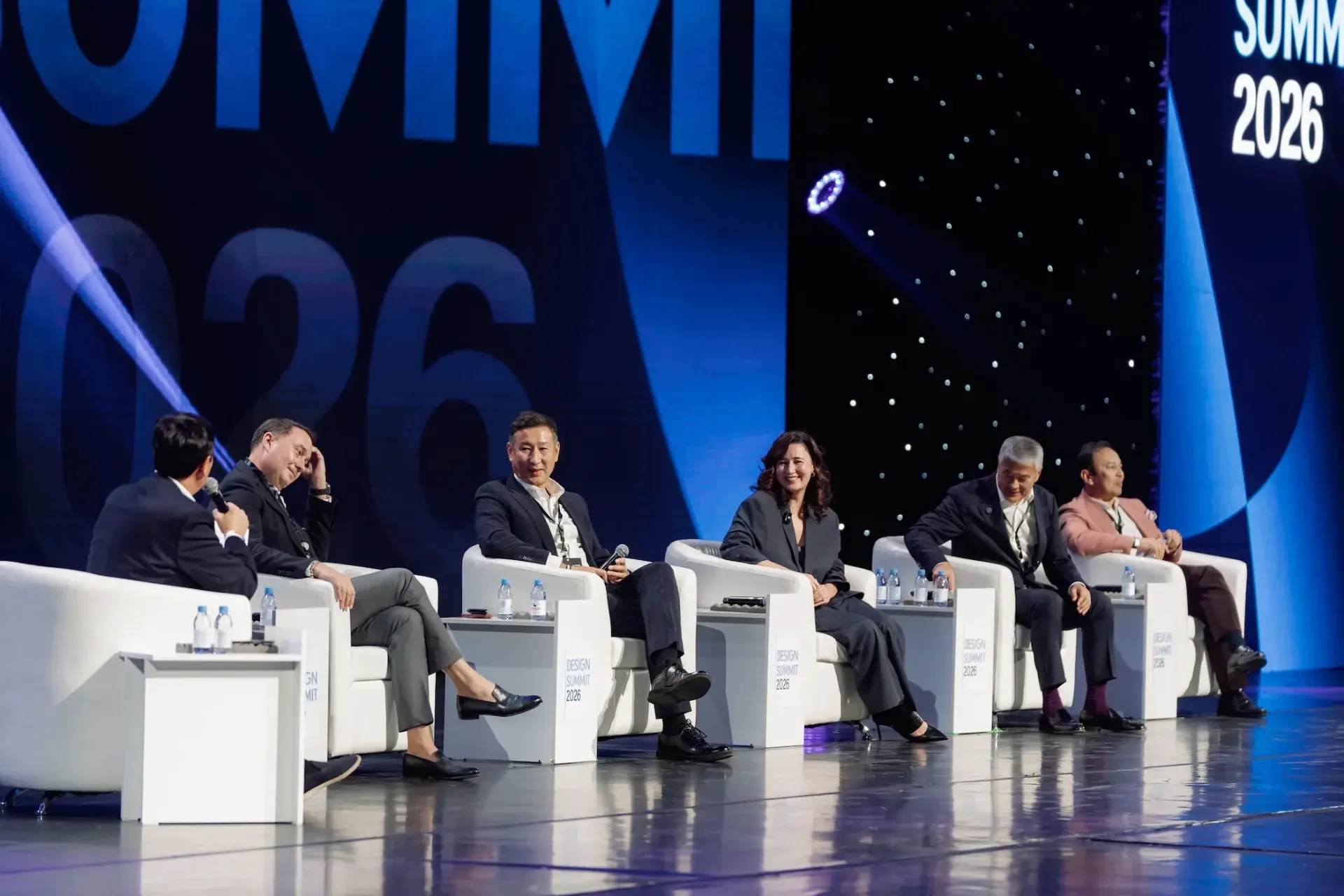
As part of the first Central Asian Design Summit 2026, held at the Palace of the Republic and organized by the Association of Design and Architecture of the Republic of Kazakhstan (ADARK), one of the business programme’s most substantial discussions took place during the panel session “Projects Shaping the City.”
The session was moderated by Armanzhan Baitassov, founder of Tan Media Group and publisher of Forbes Kazakhstan.
Rather than a formal industry presentation, the discussion developed into an open professional exchange between some of Kazakhstan’s leading developers, investors, technology entrepreneurs and architects: Murat Utemisov, CEO of Kusto Home, member of the Almaty Maslikhat and the city’s Urban Planning Council; Kairat Boranbayev, investor in urban infrastructure, development and sports and President of Kazakhstan’s National Paralympic Committee; Gozza Oligova, CEO of technology company Citix; Nurlan Kamitov, Founder and Chief Architect of INK Architects; and Anatoly Pobiyakho, founder of Line Group.
The discussion focused on the less visible mechanisms behind decision-making in major development projects. The speakers explored why investors deliberately accept multimillion-dollar increases in project costs, why outdated building regulations can be difficult for international architects to understand, and how a new philosophy of premium development is emerging in Kazakhstan.
Institutions of Aesthetics and the Investment Horizon
Opening the session, Armanzhan Baitassov referred to Amsterdam, where a dedicated committee responsible for architectural quality and aesthetics has helped shape the appearance of buildings and streets for more than a century. He asked whether Kazakhstan needs a similar institution.

Armanzhan Baitassov, Publisher of Forbes Kazakhstan. Photo: Arlan Kabdullin
Responding to the question, Kusto Home CEO Murat Utemisov drew a clear distinction between the role of public authorities and that of private business.
In his view, the state should establish firm parameters — building lines, density limits and height restrictions — while the private sector should fill those parameters with quality, creativity and ambition. Much of what gives a city its visual appeal, he argued, is ultimately created through private initiative.
Kairat Boranbayev expanded on this idea of long-term responsibility on the part of private capital, emphasizing that a high-quality project cannot be assessed solely through short-term economics.
«Architecture is not packaging — it is the product itself. Before we create something new or transform an existing building, we look at the investment horizon. It is like buying shoes: if you build a cheap building, it is the equivalent of buying cheap shoes — before long, you have to replace them. A building should be considered as a 25- to 30-year investment. If the horizon is only five years, it is no longer an investment. It is simply an expense».
Kairat Boranbayev
The Anatomy of Tselinny: Public Consultation and the Cost of Inclusivity
Developing his argument about long-term investment, Kairat Boranbayev offered a detailed account of the reconstruction of the Tselinny Center of Contemporary Culture.
The project encountered a significant number of hidden challenges that ultimately required substantial revisions to the original budget.
First, the investors rejected the option of demolishing the existing building in order to preserve part of Almaty’s architectural memory and retain the historic mosaic by artist Yevgeny Sidorkin.
Second, the team committed to removing physical barriers throughout the site. Eliminating just five Soviet-era entrance steps and making the building fully accessible required raising the level of the entire surrounding square by 1.24 metres.
One of the most revealing examples of public influence on the design involved the proposed glazed entrance.

Kairat Boranbayev on the economics of meaning and social responsibility in development. Photo: Arlan Kabdullin
«Every project needs to be discussed with the people who will live around it. When we began working on Tselinny, we held more than six public consultations. The architect initially proposed a glass entrance. But after the hearings, we realised there was a ten-storey residential building immediately to the left, and reflected sunlight would have created serious problems for residents. We had to revise the design».
Kairat Boranbayev
Abandoning a visually striking façade in favour of protecting the comfort of neighbouring residents became an example of how public dialogue can directly influence architectural ambition.
The approach ultimately proved successful. During its first year after reconstruction, the centre welcomed more than 100,000 visitors, becoming a new cultural destination for younger audiences. Its artistic programme is overseen by an international team of experts led by Bart, director of an art centre in the Netherlands.
«Landing on the Moon»: Why International Architects Struggle with Local Regulations
The discussion naturally shifted toward outdated planning and construction standards.
Nurlan Kamitov, Founder and Chief Architect of INK Architects, highlighted a fundamental gap between the pace at which business is evolving and the speed of regulatory reform.
Developers increasingly work with international benchmarks, yet projects still have to be approved under rules rooted in a very different era.

Nurlan Kamitov, Founder and Principal Architect of INK Architects. Photo: Arlan Kabdullin
«We are in active dialogue with the relevant ministry to align ourselves with global design and construction standards. Investors working with international practices share the same frustration: when foreign architects enter our market, they often feel as if they have landed on the Moon. Many of our outdated regulations are completely unfamiliar to them, and in some cases even we can no longer explain their practical logic».
Nurlan Kamitov
Regulatory constraints also have a direct impact on the economics of development.
Anatoly Pobiyakho, founder of Line Group, illustrated the problem through the complex approval and design process behind Villa dei Fiori — Villa Boutiques & Restaurants on Al-Farabi Avenue.
«The city imposed strict requirements: the building footprint could not exceed 50% of the site. From the standpoint of conventional project economics, that initially appeared unviable. At the same time, the location on Al-Farabi Avenue required extensive landscaping. Our three-hectare site narrowed toward the Esentai River, so the challenge was to position the building as harmoniously as possible while preserving a green frontage».
Anatoly Pobiyakho
To resolve the challenge, the developer commissioned renowned British practice WATG, known for projects for the Six Senses hospitality brand.
The architects proposed shielding the development from the noise of the main road through cascading layers of landscaping.
Pobiyakho acknowledged that, in purely mathematical and economic terms, it became one of the most challenging projects in the group’s portfolio. Yet it was conceived as a contribution to the visual quality of the city.
When the moderator asked what an architect should never compromise on, even under pressure from an investor, Nurlan Kamitov’s answer was unequivocal.
Architecture can be adapted. Façade solutions can be simplified. But an architect must defend the quality of space — the fundamental value without which a building loses its meaning for the people who use it.
The Philosophy of the “Unbuilt Square Metre” and High-Tech Comfort
Murat Utemisov continued the discussion around spatial quality by addressing density in residential development.
In a market where every additional floor can mean direct additional revenue, he argued, a responsible developer must know when to stop.

Murat Utemisov, Chairman of the Management Board of Kusto Home. Photo: Arlan Kabdullin
«The most valuable square metre is the one the developer consciously decides not to build. You have to understand where to stop in order to preserve a high quality of living. Excessive density, the pursuit of volume and adding more apartments to every floor inevitably create discomfort and leave too little room for high-quality landscaping and public space».
Murat Utemisov
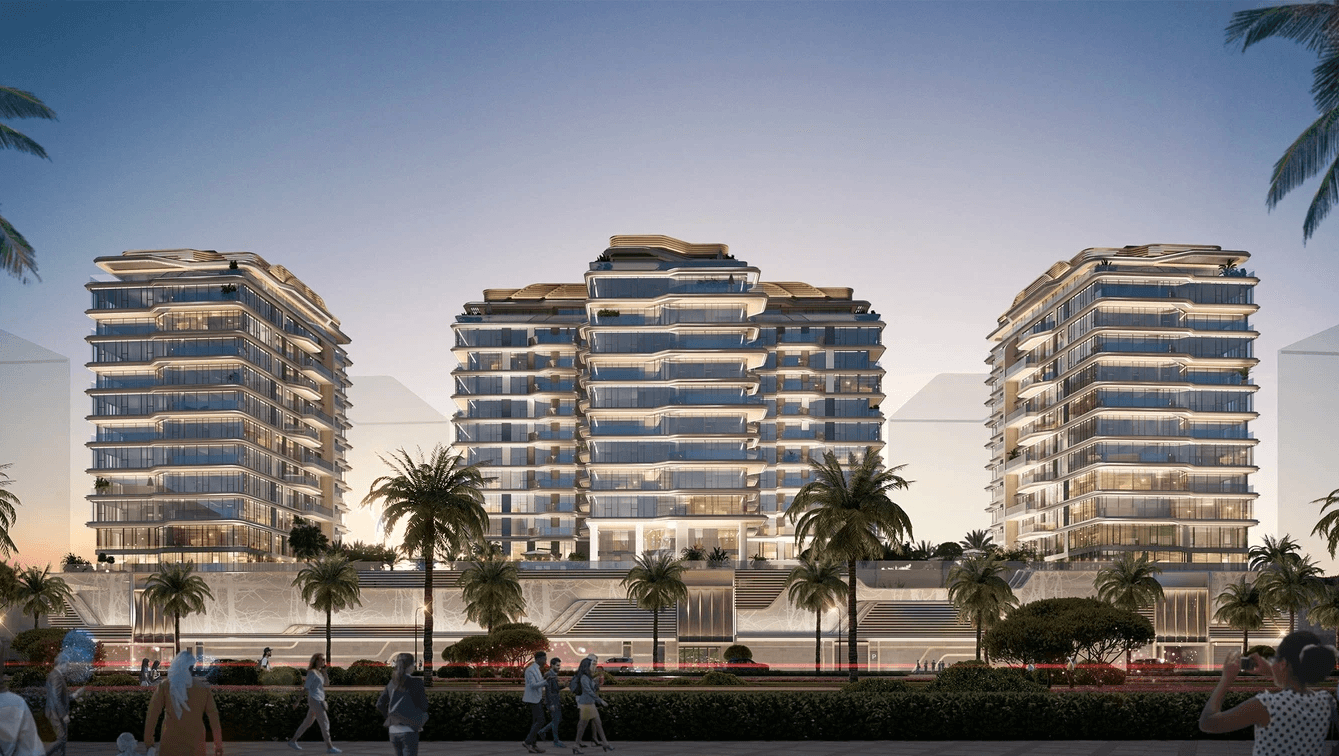
This principle was applied in the Diamond residential development on Al-Farabi Avenue, a joint project by Kusto Home and INK Architects.
Despite being surrounded by 14- and 20-storey buildings, the developer chose to limit the project to only nine floors.
The team went further still: half of the original site was transferred at no cost for the construction of a municipal school.
The decision immediately helped create a complete educational and commercial cluster around the residential complex, reducing the need for future residents to spend additional time commuting through city traffic.
Utemisov also highlighted a broader shift away from superficial luxury toward the engineering quality and environmental health of residential developments.
At Koktobe City, the developer became the first in Kazakhstan to implement Japanese seismic-resistance certification. At Diamond, every apartment is equipped with an individual fresh-air supply system with HEPA filtration capable of removing up to 99% of outdoor pollutants.
For residents of a major city, this allows interiors to be protected from smog and allergens without the need to open windows during winter.
Information Ecology and Technological Architecture
The final stage of the discussion shifted from concrete and glass toward the digital environment.
Gozza Oligova, CEO of Citix, argued that information overload is becoming an urban problem in its own right — comparable, in some respects, to congestion or environmental pollution.
According to the discussion, the average Almaty resident is exposed to more than 3,000 advertising messages every day.

Gozza Oligova (Citix) on the role of digital infrastructure in the modern metropolis. Photo: Arlan Kabdullin
«Our architecture is different — it is technological. It is almost impossible to eliminate information noise from the contemporary city, but we can make that environment more comfortable. We integrate navigation and useful services into urban devices — weather information, environmental monitoring and smart routing — turning technology into a practical interface for the user».
Gozza Oligova, CEO of Citix
By transforming urban media infrastructure into a new generation of smart devices — including the distinctive “black cubes” installed together with Visit Almaty, equipped with Wi-Fi access points and safety modules — technology companies are creating an invisible but increasingly important layer of smart-city infrastructure.
Its purpose is not simply to display information, but to reduce visual stress and make technology serve the needs of people.
The Search for a Central Asian Architectural Code
As the discussion drew to a close, moderator Armanzhan Baitassov and Line Group founder Anatoly Pobiyakho converged on a broader legal and ethical principle: major private development should ultimately contribute to the public good.

Anatoly Pobiyakho, Founder of Line Group. Photo: Arlan Kabdullin
«It is impossible to calculate the future success of a project through mathematics alone — intuition always plays a role. If you genuinely love what you do, and your team shares that passion, then a product created with care and extraordinary attention to detail becomes both beautiful and successful».
Anatoly Pobiyakho
This value-driven view of development was echoed in the closing remarks of Kairat Boranbayev.
He noted that a distinct Central Asian identity is now rapidly emerging across architecture, real estate and design — a new visual language combining the traditions of Kazakhstan, Kyrgyzstan and Uzbekistan with contemporary forms.

Investor Dialogue: Kairat Boranbayev and Murat Utemisov discuss the future direction of the architectural environment. Photo: Arlan Kabdullin
National patterns are no longer treated as something archaic. Instead, they are increasingly integrated into contemporary architecture and urban design.
As an example of the growing international interest in local cultural identity, Boranbayev referred to a recent Louis Vuitton project featuring a large-scale installation inspired by the traditional Kazakh yurt.
The example reflects a broader global demand for authenticity, regional culture and place-specific identity.
The wider conclusion of the discussion was clear: events of this scale, bringing together leading architects, investors and industry experts through the Association of Design and Architecture of the Republic of Kazakhstan (ADARK), are establishing a new benchmark for the region’s architecture and development industry.
Responsible market leaders are increasingly thinking in decades rather than individual development cycles. Their focus is shifting away from short-term commercial gain toward the thoughtful integration of new projects into the existing urban fabric.
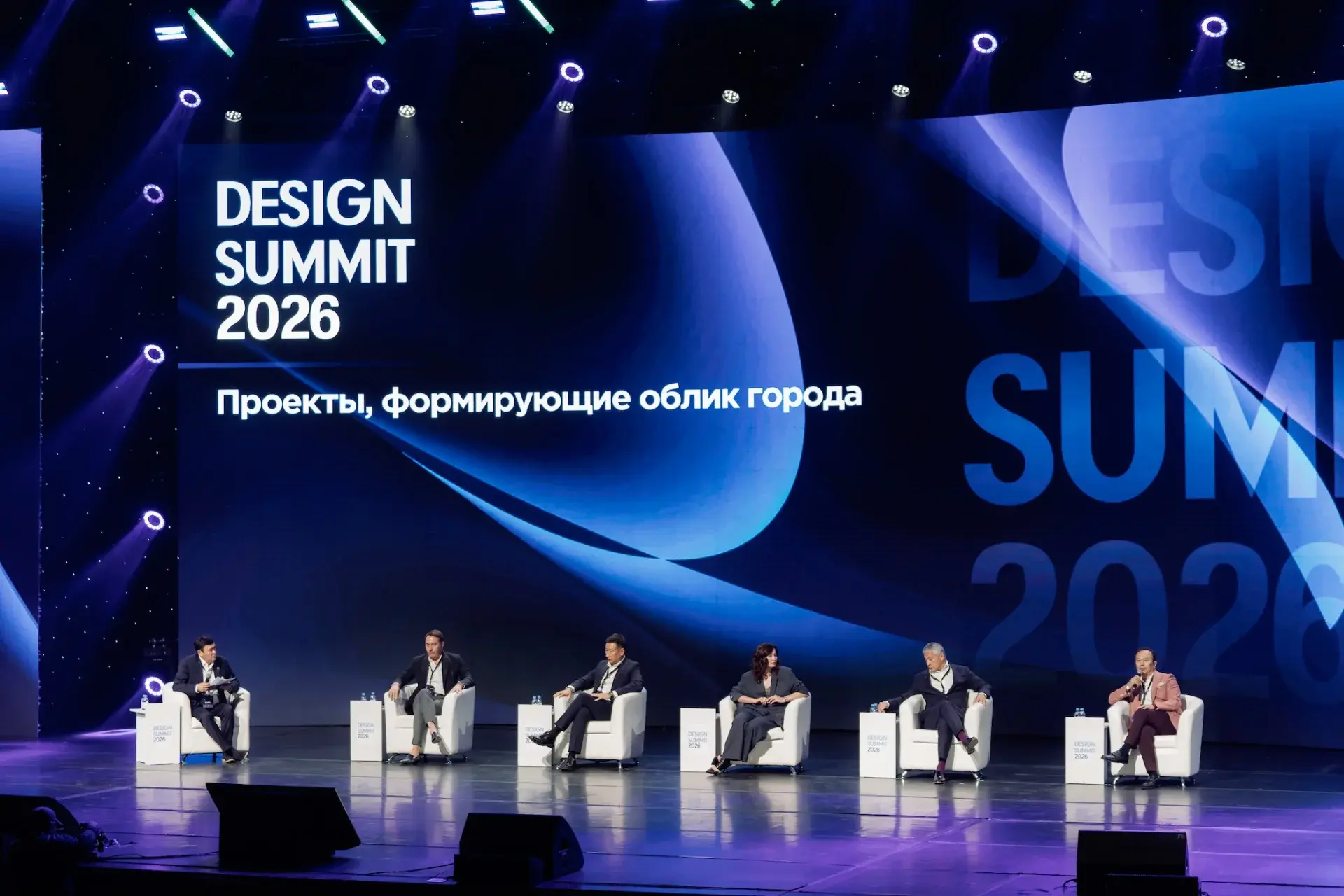
Participants exchanged views on the future of architecture and development in Kazakhstan. Photo: Arlan Kabdullin
For these industry leaders, a major development is not only a commercial undertaking but also a professional challenge and an expression of civic responsibility.
This means preserving historic heritage, improving the quality of public space and creating buildings that do more than simply fit into their surroundings — buildings capable of becoming architectural markers of their era and remaining relevant for generations.
Behind every such project lies the work of large multidisciplinary teams, from investors and architects to engineers and planners.
It is this collaboration — together with professional commitment and attention to detail — that makes it possible to create distinctive places that evolve into new centres of activity, shape the visual identity of the city and become contemporary landmarks for future generations.
Source: Yestate.kz